Glossary • Plain English • No jargon goblins

Community builder glossary.

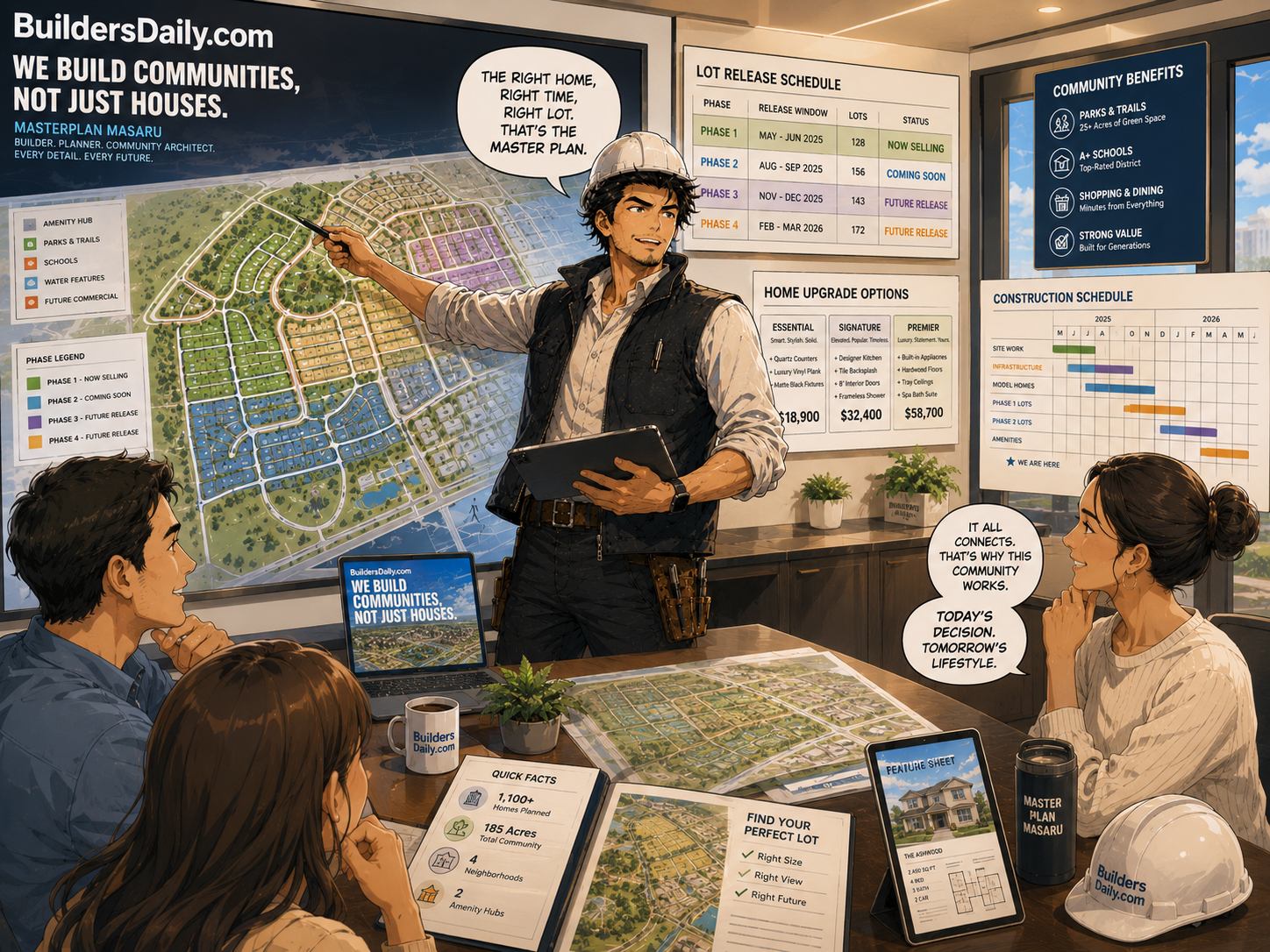
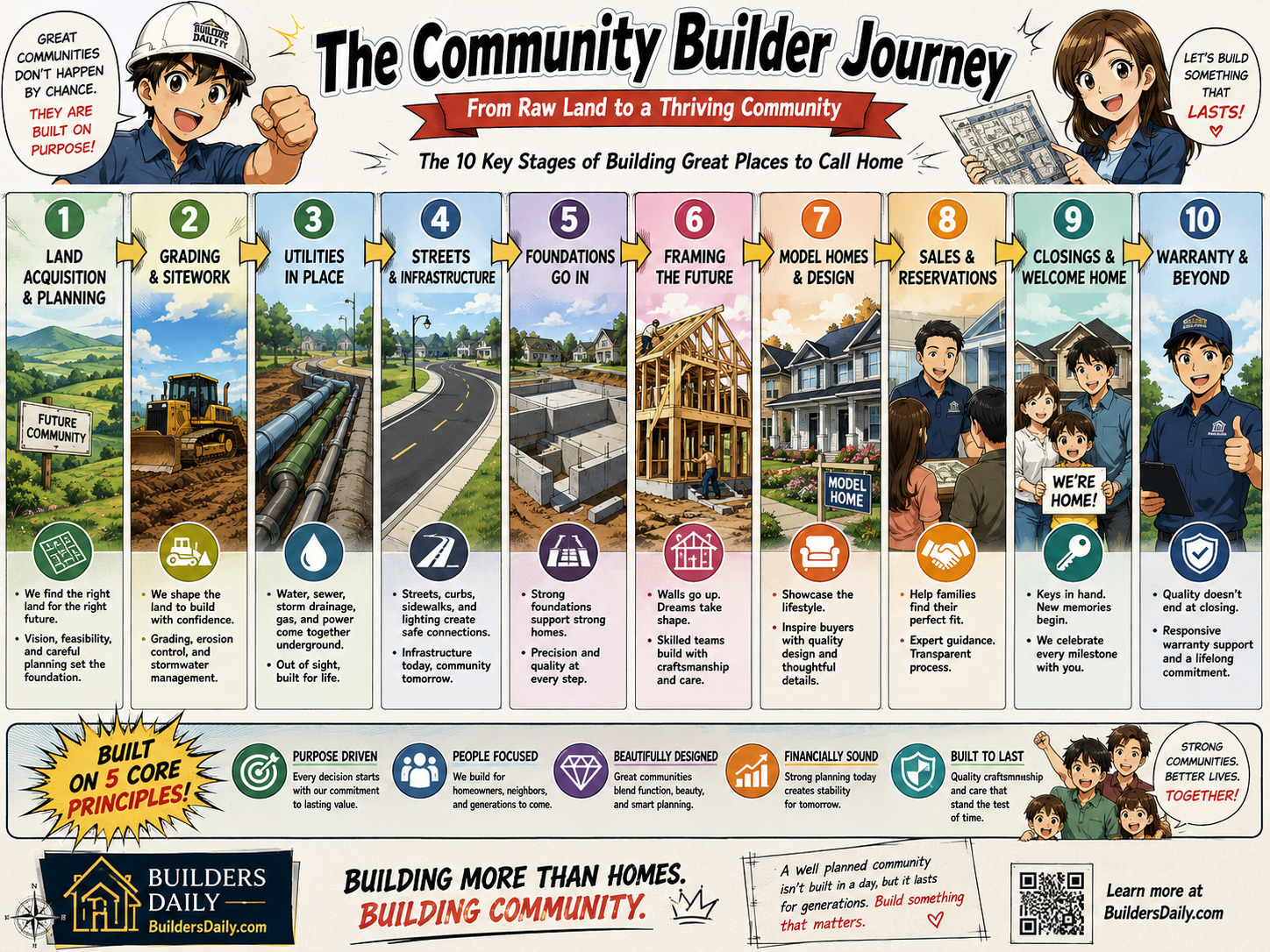
Production builders, developers, sales teams, buyers, and curious neighbors all use different words for the same community machine. This glossary translates the language of lots, phases, utilities, models, starts, closings, absorption, HOA rules, and goblin attacks.

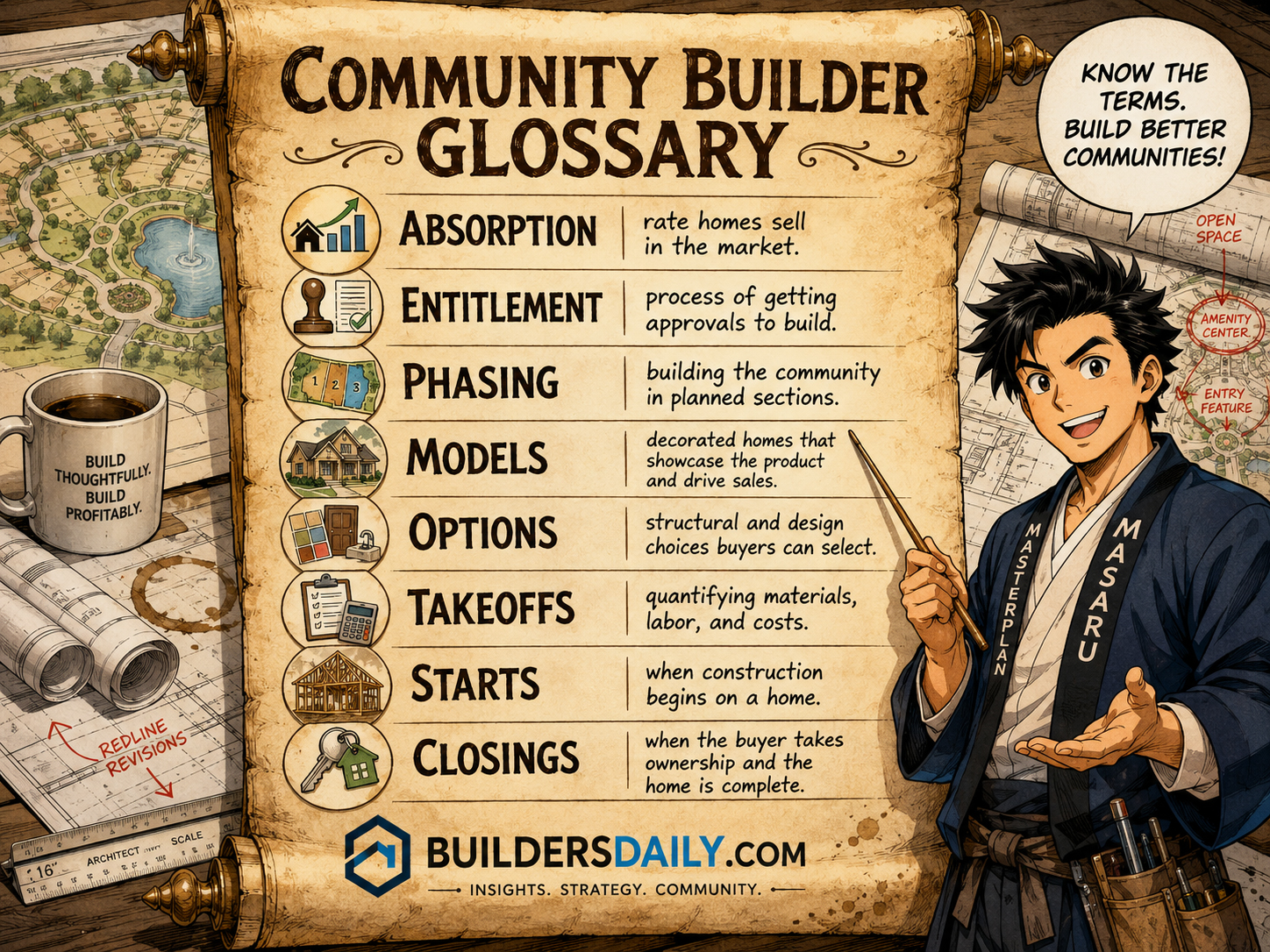
Manga glossary scroll explaining absorption, entitlement, phasing, models, options, takeoffs, starts, and closings
The scroll of community-builder words Define before debate
Glossary rules

Words are tools. Loose words are goblins.

Rule 01

Define the word before pricing the work.

Allowance, option, upgrade, standard, premium, and change can mean different things unless the team defines them clearly.

Rule 02

Some terms belong to the map.

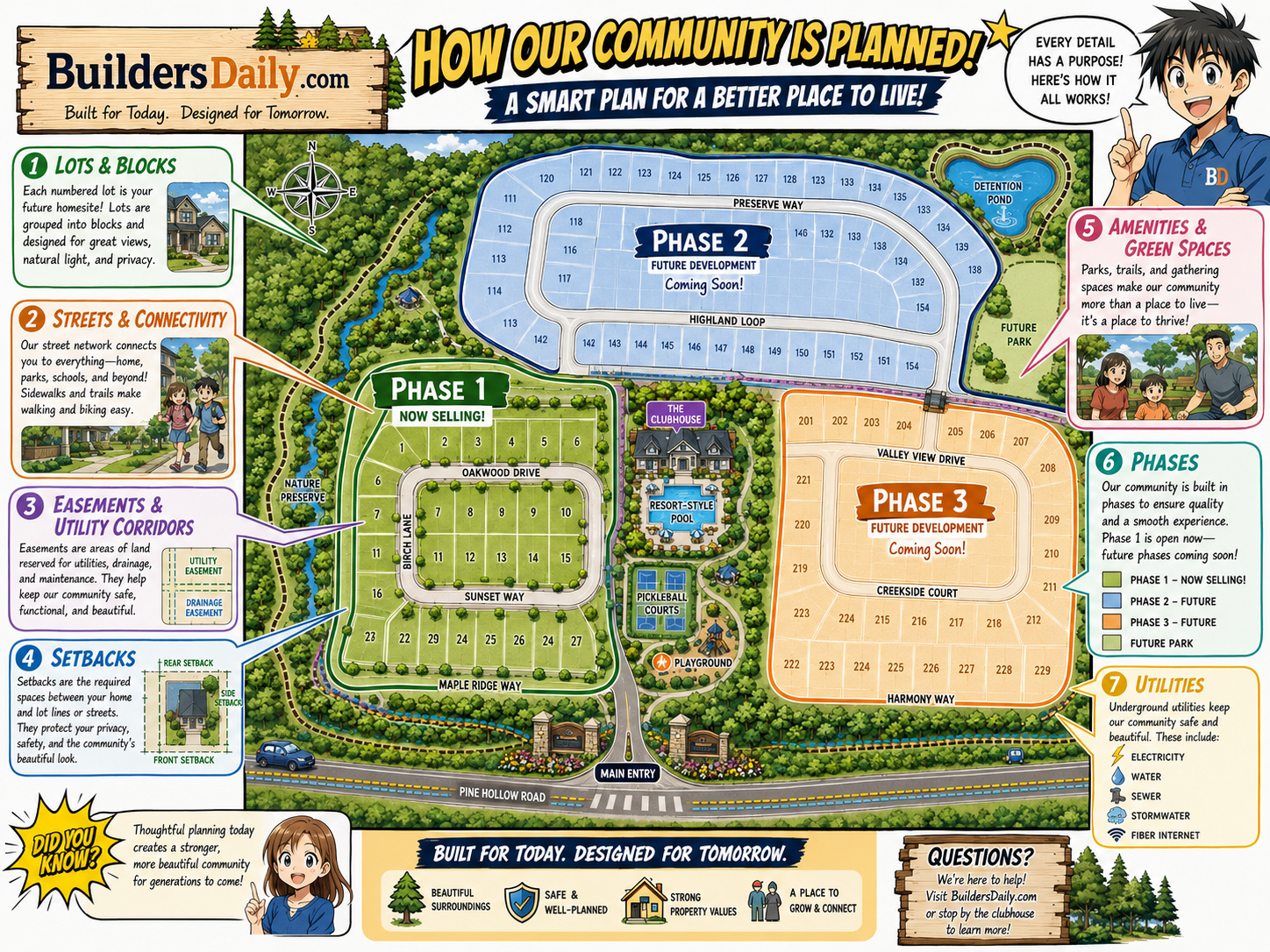
Lot, setback, easement, phase, utility corridor, and drainage path are map words that affect what can be built and sold.

Rule 03

Some terms belong to the market.

Absorption, starts, inventory, incentives, traffic, conversion, and closings connect construction to buyers and cash flow.

A–C

Absorption to closing.

Market pace, approvals, buyer choices, and the big finish line.

A

Absorption

The pace at which buyers purchase homes in a community. Masaru watches it because starts should not outrun real demand. See Absorption Rate Oracle.

A

Allowance

A budgeted amount for a selection or scope category. Trouble begins when the allowance does not match buyer expectations or real installed cost.

C

CC&Rs

Covenants, conditions, and restrictions. These community rules can affect design, maintenance, use, HOA obligations, and owner expectations.

C

Change order

A documented change in scope, cost, schedule, or terms. In a community, a small revision can ripple across many lots.

C

Closing

The point where sale, construction completion, lender/title work, documents, final approvals, and buyer readiness converge.

C

Contingency

Money reserved for real unknowns. The Budget Gremlin loves treating contingency like a snack drawer.

D–G

Design center to grading.

Selections, approvals, utility rights, and dirt math.

D

Design center

Where buyers choose finishes, options, fixtures, cabinets, flooring, counters, and upgrades. See Community Allowance Trap.

E

Easement

A right for access, utilities, drainage, maintenance, or other use across property. Easements can affect fences, yards, and improvements.

E

Entitlement

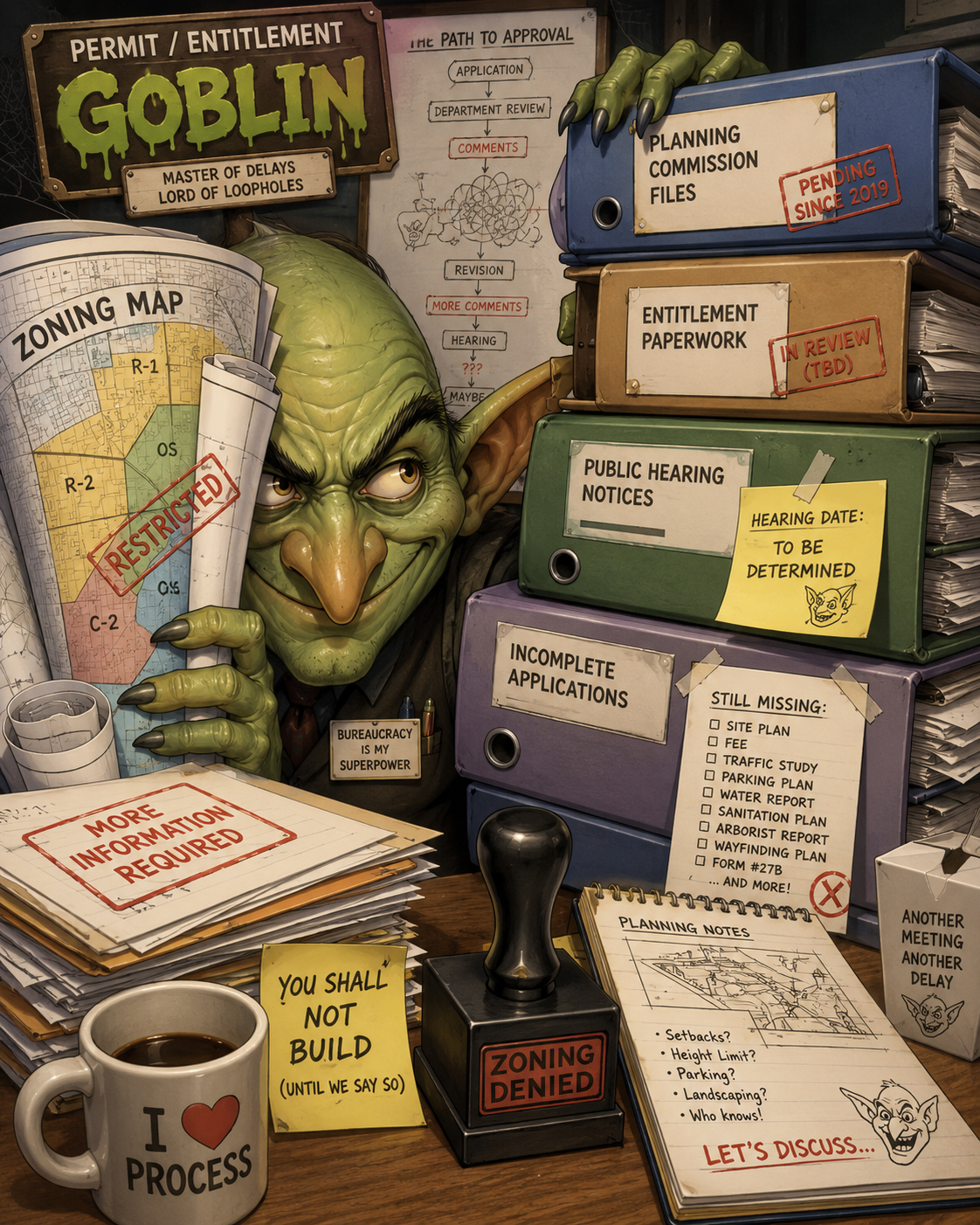
The approval path that lets land become a buildable community. Comments, hearings, and conditions can shape the whole schedule.

F

Final inspection

An approval gate near completion. It may involve corrections, safety, utilities, documents, occupancy, or jurisdiction requirements.

G

Grading

Earthwork that shapes pads, streets, slopes, drainage, and site elevations. The Grading Goblin lives here.

G

Grand opening

A public launch event for the community or models. It sits on top of approvals, site readiness, models, sales, signage, and access.

H–L

HOA to lot premium.

Community rules, lot expectations, and map details.

H

HOA

Homeowners association. It may manage amenities, maintenance, rules, dues, design guidelines, and community obligations.

I

Incentive

A buyer or sales incentive such as credit, upgrade package, price adjustment, or rate buy-down. Incentives can protect pace but affect margin.

I

Inventory

Homes built or under construction that are not yet sold or closed. Too much inventory can pressure incentives and margins.

L

Lot

An individual home site. Its value can be affected by size, view, corner position, easements, setbacks, drainage, and future surroundings.

L

Lot line

The property boundary. Do not rely on vibes, grass, or temporary fencing. See Lot Line Goblin.

L

Lot premium

Additional price tied to a lot’s location, view, size, corner status, amenity access, scarcity, or special feature.

M–P

Model home to punch list.

The buyer-facing parts of the machine.

M

Model home

A staged sales home used to show layout and design possibilities. It may include upgrades, staging, and features not included in base price.

O

Option

A buyer-selectable feature, finish, layout, or package. Options may affect price, deadlines, construction, and schedule.

P

Pad

The prepared building area for a home. Pad elevation, drainage, compaction, and access affect foundations and sitework.

P

Phase

A portion of the community built, sold, or released in sequence. Phasing controls infrastructure, cash, trades, sales, and buyer experience.

P

Production builder

A builder that builds multiple homes in a repeatable system, often within communities, phases, plans, and option packages.

R–S

Rough trades to stormwater.

The field work that makes the homes and streets function.

R

Rough trades

Early electrical, plumbing, mechanical, low-voltage, and similar work before finishes close walls or ceilings.

S

Setback

Required distance from property lines, streets, easements, slopes, or other features. Setbacks affect future use and design.

S

Site plan

The map showing lots, streets, easements, utilities, setbacks, phases, amenities, and community layout.

S

Sitework

Work to prepare the land: grading, utilities, stormwater, roads, erosion control, pads, and related infrastructure.

S

Start

A home moving into construction. Starts should match lot release, trade capacity, buyer demand, inspections, and cash flow.

S

Stormwater

Runoff management through drainage, erosion control, basins, inlets, swales, logs, and maintenance. See Stormwater Ogre.
T–W

Takeoffs to warranty.

Numbers, underground systems, and the after-closing handoff.

T

Takeoff

A quantity measurement from plans, such as concrete, lumber, pipe, conduit, dirt, or finishes. Bad takeoffs feed the Budget Gremlin.

U

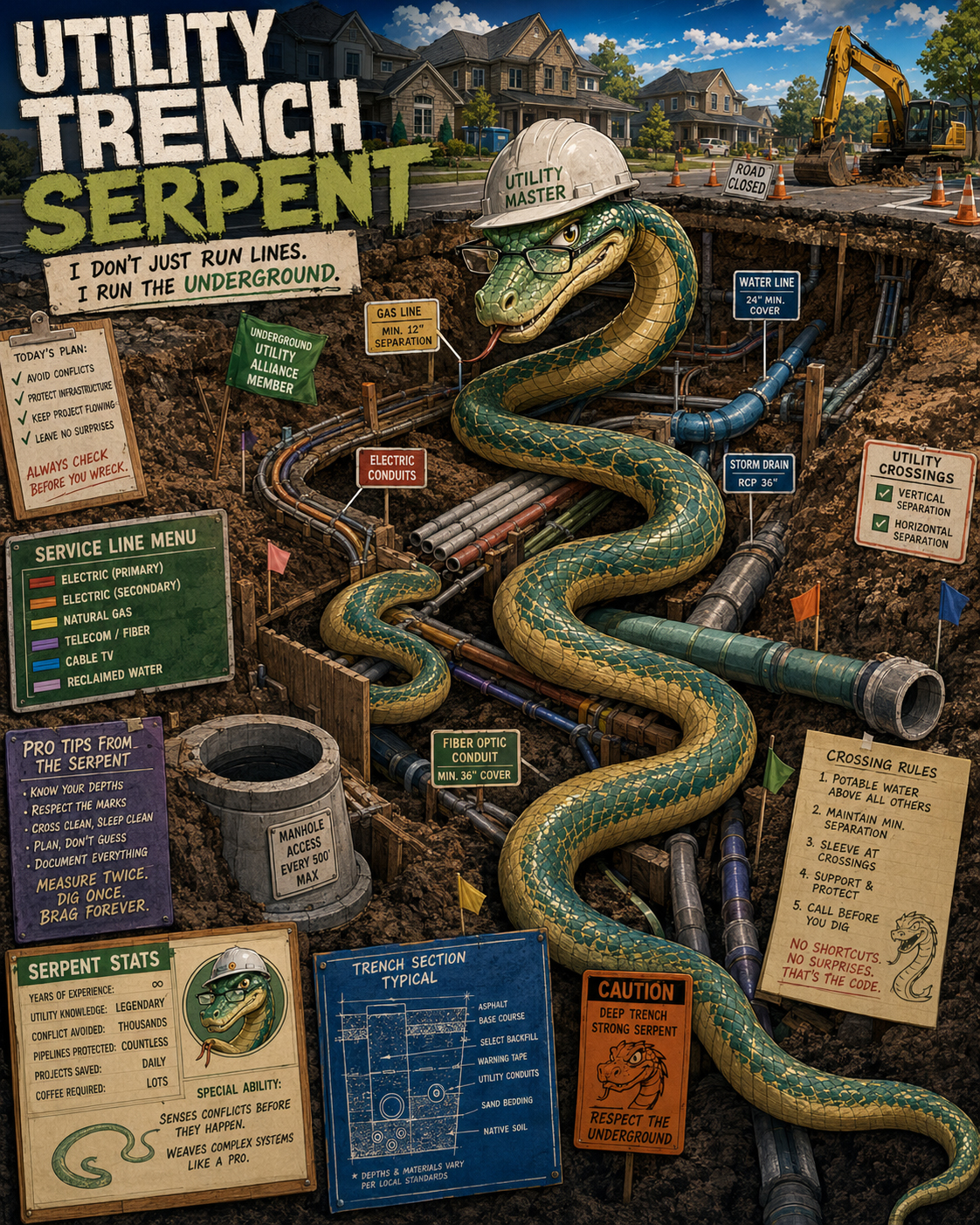
Utility corridor

Area reserved for utilities such as water, sewer, power, telecom, gas, or storm systems. The Trench Serpent lives nearby.

U

Upgrade

A feature or finish above the standard package. It may affect price, purchasing, lead time, and construction sequence.

W

Walkthrough

A buyer review/orientation before closing, often tied to punch items, system explanations, and handoff details.

W

Warranty

The post-closing process for covered items under builder warranty documents. Different from normal maintenance or owner damage.

W

Wet utilities

Water, sewer, storm, and related underground systems. They must coordinate with dry utilities, roads, and inspections.

When the words are clear, the goblins lose power.

A glossary does not build the community. But clear words help sales, construction, buyers, developers, consultants, and inspectors discuss the same reality before confusion becomes cost, delay, or disappointment.

Glossary monsters

Terms become characters when they bite.

BuildersDaily turns the confusing words into characters so the lesson is easier to remember.

Important

Educational glossary, not legal, construction, or real-estate advice.

BuildersDaily.com is educational manga comedy about community-builder concepts. Definitions are plain-English educational summaries, not legal, engineering, construction, real-estate, financial, HOA, warranty, contract, or project-specific advice. Always consult qualified professionals, approved plans, contracts, governing documents, disclosures, permits, and authorities having jurisdiction.

Hard hat, site plan, ruler, and educational site disclaimer visual