Design center guide • Options, upgrades, buyer expectations

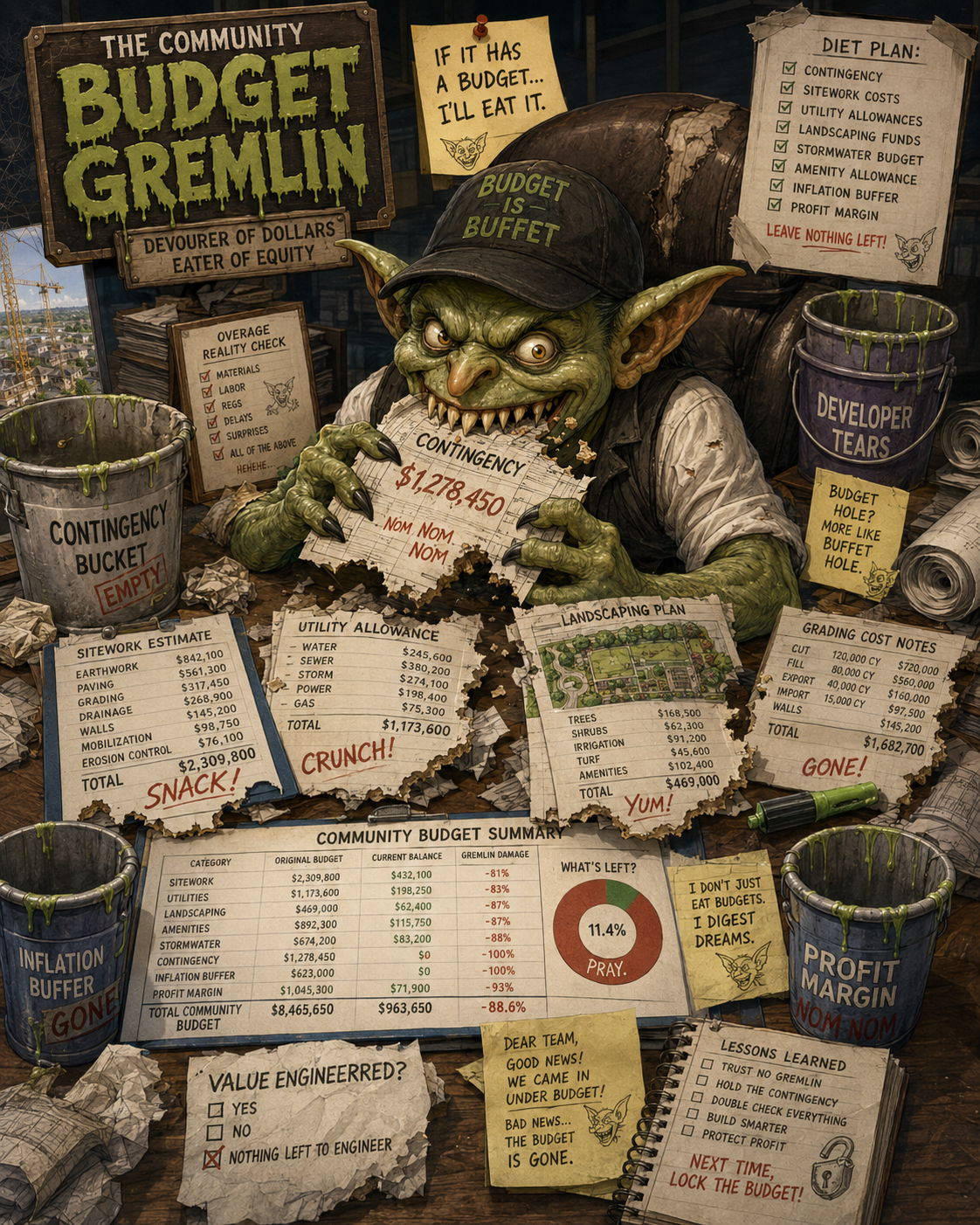
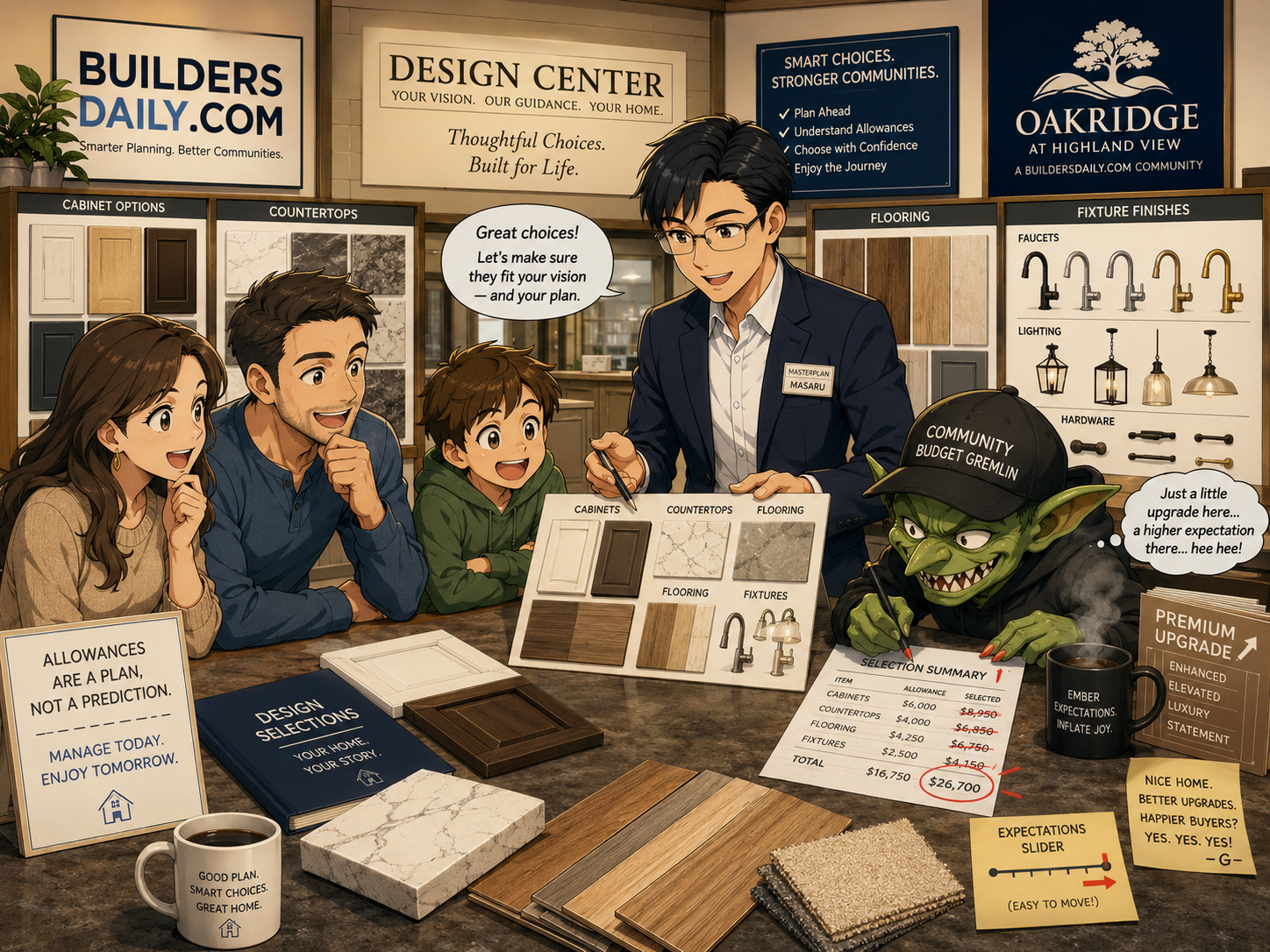
The design center is where the Budget Gremlin smiles.

Buyers choose cabinets, flooring, counters, fixtures, lighting, appliances, and option packages. The model home whispers dreams. The Budget Gremlin adjusts the math. Masaru knows the trap: beautiful selections need clear pricing, deadlines, and production impact before they become confusion.

Design center selections where the Budget Gremlin adjusts options, upgrades, and buyer expectations
Design center danger: every upgrade has a ripple Price before promise
Allowance trap

The upgrade is not the only cost.

Trap 01

Material price is not installed cost.

A selection can affect labor, trim, delivery, layout, rough-in, inspections, trade sequence, lead time, and rework risk.

Trap 02

Late choices can move production.

Cabinet layouts, electrical upgrades, plumbing fixtures, appliances, and structural options may have deadlines tied to permits, rough-in, purchasing, and starts.

Trap 03

The model home can distort expectations.

Buyers may assume the staged dream is the base package unless standards, options, upgrades, premiums, and exclusions are explained clearly.

Selection map

What to track in the design center.

Each category can affect price, schedule, purchasing, rough-in, and buyer expectations.

Track

Cabinets

Door style, finish, layout, inserts, panels, hardware, fillers, and lead times.

Track

Flooring

Material, transitions, stairs, wet areas, installation pattern, prep, and schedule.

Track

Counters

Material, edge, slab layout, sink cutouts, backsplash, fabrication, and install timing.

Track

Fixtures

Faucets, valves, sinks, drains, rough-in compatibility, and finish coordination.

Track

Lighting

Fixtures, dimmers, controls, cans, low-voltage, switch locations, and lead times.

Track

Appliances

Openings, power, gas, ventilation, water, delivery, trim kits, and cabinet coordination.
Buyer questions

Questions to ask before choosing upgrades.

These questions help keep the Model Home Mirage and Budget Gremlin from teaming up.

Included

What is standard?

Ask what is included in the base price and what shown in the model is upgraded, staged, optional, or unavailable.

Cost

What is the full installed cost?

Ask whether pricing includes labor, tax, freight, special install, rough-in changes, and schedule effects.

Deadline

When is the decision due?

Ask when each choice must be finalized to avoid affecting permits, purchasing, rough-in, trade scheduling, or closing.

Compatibility

Does this affect other selections?

Ask whether appliances affect cabinets, fixtures affect rough-in, lighting affects switching, or flooring affects transitions.

Paper trail

Where is this documented?

Ask for signed selection sheets, option confirmations, change records, pricing, and the current buyer package.

Change

What happens if I change later?

Ask about cutoff dates, cancellation fees, restocking, redesign, rework, and schedule impacts.

Selection clarity protects everyone.

Buyers deserve to understand what they are choosing. Builders need accurate pricing, deadlines, purchasing data, trade coordination, and buyer signoff. The Budget Gremlin wins when beautiful choices are not tracked as real project decisions.

Tracking defense

The gremlin hates visible math.

Design-center choices should become clear records, not mystery memories.

Separate base, option, upgrade, and staging.

Make sure every buyer can distinguish what is included, what costs more, what is staged, and what is not available.

Connect selections to production.

Track which choices affect permits, purchasing, rough-in, cabinets, appliances, inspections, lead times, and closing dates.

Protect contingency and margin.

Do not let unclear options, incentives, credits, or upgrades quietly eat the project margin without visibility.

Important

Educational guide, not sales, contract, financial, or project advice.

BuildersDaily.com is educational manga comedy about community-builder concepts. This page is not legal, sales, disclosure, contract, financial, estimating, design, or project-specific construction advice. Always consult qualified professionals, approved contracts, option documents, disclosures, plans, and authorities having jurisdiction.

Hard hat, site plan, ruler, and educational site disclaimer visual