Villain file • Budgets • Margins • Starts • Absorption

Spreadsheet Dragon.

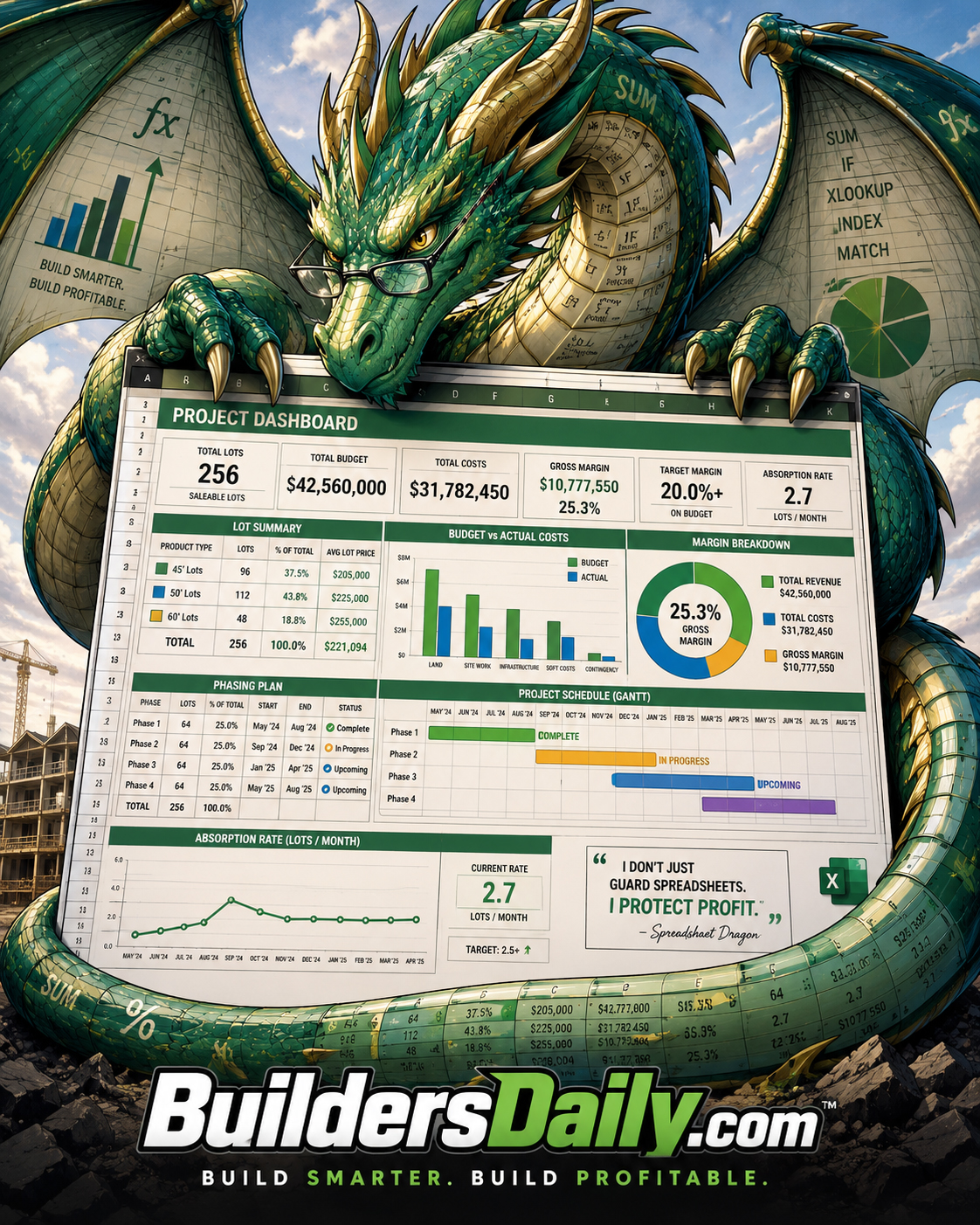
The Spreadsheet Dragon is the community-builder monster wrapped around budgets, lot counts, starts, schedules, margins, incentives, cycle times, absorption rates, and closings. He does not hate numbers. He hates stale assumptions pretending to be truth.

Large dragon wrapped around a giant spreadsheet of lots, budgets, schedules, margins, and absorption rates
The dragon who lives in Version_Final_FINAL Update assumptions
Monster profile

Every cell has teeth.

Habitat

He lives in the pro forma.

The Spreadsheet Dragon coils around tabs named Budget, Starts, Options, Closings, Absorption, Incentives, Cycle Time, and the most dangerous tab of all: Assumptions.

Power

He turns old numbers into fire.

A cost that changed, a pace that slowed, a start that slipped, or an incentive that grew can all ignite the dragon if nobody updates the model.

Truth

The dragon is not always wrong.

Sometimes the dragon is warning the team. The danger is ignoring him until the field has already proven the spreadsheet stale.

Dragon powers

How he burns the plan.

The dragon does not need chaos. He only needs one assumption nobody checks.

Power 01

Margin flame

Sitework, incentives, carry, upgrades, and construction variance can burn the margin column before anyone sees smoke.

Power 02

Start distortion

The dragon makes aggressive starts look reasonable until trades, inspections, utilities, and sales pace disagree.

Power 03

Absorption fog

He lets old sales pace assumptions linger even after buyer traffic, rates, incentives, or competition have changed.

Power 04

Version confusion

He hides in duplicate files, stale tabs, copied formulas, and the sacred lie of “final_final_revised.”

Power 05

Incentive smoke

Incentives may protect sales pace, but the dragon hides their effect on margin unless the team tracks them clearly.

Power 06

Cycle-time claws

If cycle time expands, closings move, cash shifts, carrying costs grow, and the dragon starts sharpening his claws.
Dragon defense dashboard

What must stay visible.

The dragon shrinks when assumptions are current, owned, and connected to field reality.

Metric

Lot release

Which lots are actually buildable, not just shown in the plan.

Metric

Starts

How many homes can begin without choking trades, inspections, cash, or demand.

Metric

Cycle time

Real duration from start to close, including inspection and trade constraints.

Metric

Margin

Base cost, options, incentives, sitework, carrying cost, and variance.

Metric

Absorption

Actual buyer pace compared with the pace assumed by the plan.

Metric

Closings

Where sales, construction, lending, title, buyer readiness, and approvals meet.

The spreadsheet is not reality. It is a dragon map.

A spreadsheet is useful when it tracks assumptions against reality. It becomes dangerous when the team treats old numbers as truth after the field, market, costs, or schedule have changed.

Monster relationships

The dragon has allies.

The Spreadsheet Dragon gets stronger when other community-builder monsters change the plan but the dashboard stays frozen.

Featured episode

Episode 4: The Spreadsheet Dragon

Masaru opens the pro forma and the dragon wakes. Budgets, starts, margins, schedules, incentives, and absorption assumptions all begin breathing fire.

Spreadsheet Dragon breathes fire over budgets, lot counts, margins, and schedules
Important

Character comedy, not financial or development advice.

The Spreadsheet Dragon is a fictional educational manga character. BuildersDaily.com is not legal, land-use, entitlement, financial, market forecasting, accounting, engineering, architectural, or project-specific construction advice. Always consult qualified professionals.

Hard hat, site plan, ruler, and educational site disclaimer visual