Site plan guide • Lots, streets, easements, utilities, phases

How to read a community site plan.

A community site plan is the secret map behind the model-home tour. It shows lots, streets, easements, utilities, setbacks, parks, amenities, phases, drainage, future construction, and all the tiny places where goblins like to hide.

Community site plan with manga callouts explaining lots, streets, easements, utilities, setbacks, phases, and amenities
The truth map behind the model tour Read before choosing
Site plan basics

The map is not decoration.

Truth 01

A lot is surrounded by context.

Its value and livability can be affected by street location, corner conditions, neighbors, slopes, drainage, easements, amenities, future phases, and access.

Truth 02

Future construction is part of today’s decision.

Phase lines, future lots, temporary access, sales trailers, utility work, and unfinished amenities can affect the buyer experience after move-in.

Truth 03

Hidden lines matter.

Easements, setbacks, utility corridors, drainage paths, and HOA areas may not feel real during a model tour, but they matter later.

Site plan legend

What to look for on the map.

Not every site plan uses the same symbols, but these are the common concepts buyers and teams should understand.

Map item

Lots

Individual home sites, lot numbers, size, shape, orientation, premiums, and adjacent conditions.

Map item

Streets

Access, traffic flow, cul-de-sacs, driveways, sidewalks, street trees, parking, and construction routes.

Map item

Easements

Utility, drainage, access, maintenance, slope, and public easements that affect use or future changes.

Map item

Utilities

Water, sewer, storm, power, telecom, gas, transformers, service points, and utility corridors.

Map item

Setbacks

Required distances from property lines, streets, slopes, easements, and structures.

Map item

Amenities

Parks, trails, pools, entries, gates, open space, community buildings, and maintenance responsibilities.

Buyer questions

Questions to ask while looking at the site plan.

A good site-plan conversation can prevent the Lot Line Goblin, HOA Phantom, and Model Home Mirage from tag-teaming the buyer later.

Lot

What surrounds this lot?

Ask about adjacent homes, future phases, streets, walls, slopes, amenities, utilities, drainage, and open space.

Future

What is not built yet?

Ask which phases, homes, streets, amenities, utilities, landscaping, and common areas will come later.

Limits

Where are the restrictions?

Ask about setbacks, easements, utility areas, drainage, HOA rules, fence limits, and future improvements.

Premium

Why does this lot cost more?

Ask whether premium is based on view, size, corner condition, location, cul-de-sac, amenity access, or scarcity.

Access

How will construction traffic move?

Ask about construction routes, temporary access, sales parking, future phase work, and daily access during buildout.

HOA

Who maintains what?

Ask about HOA areas, owner maintenance, front yards, slopes, common walls, landscaping, amenities, and dues.
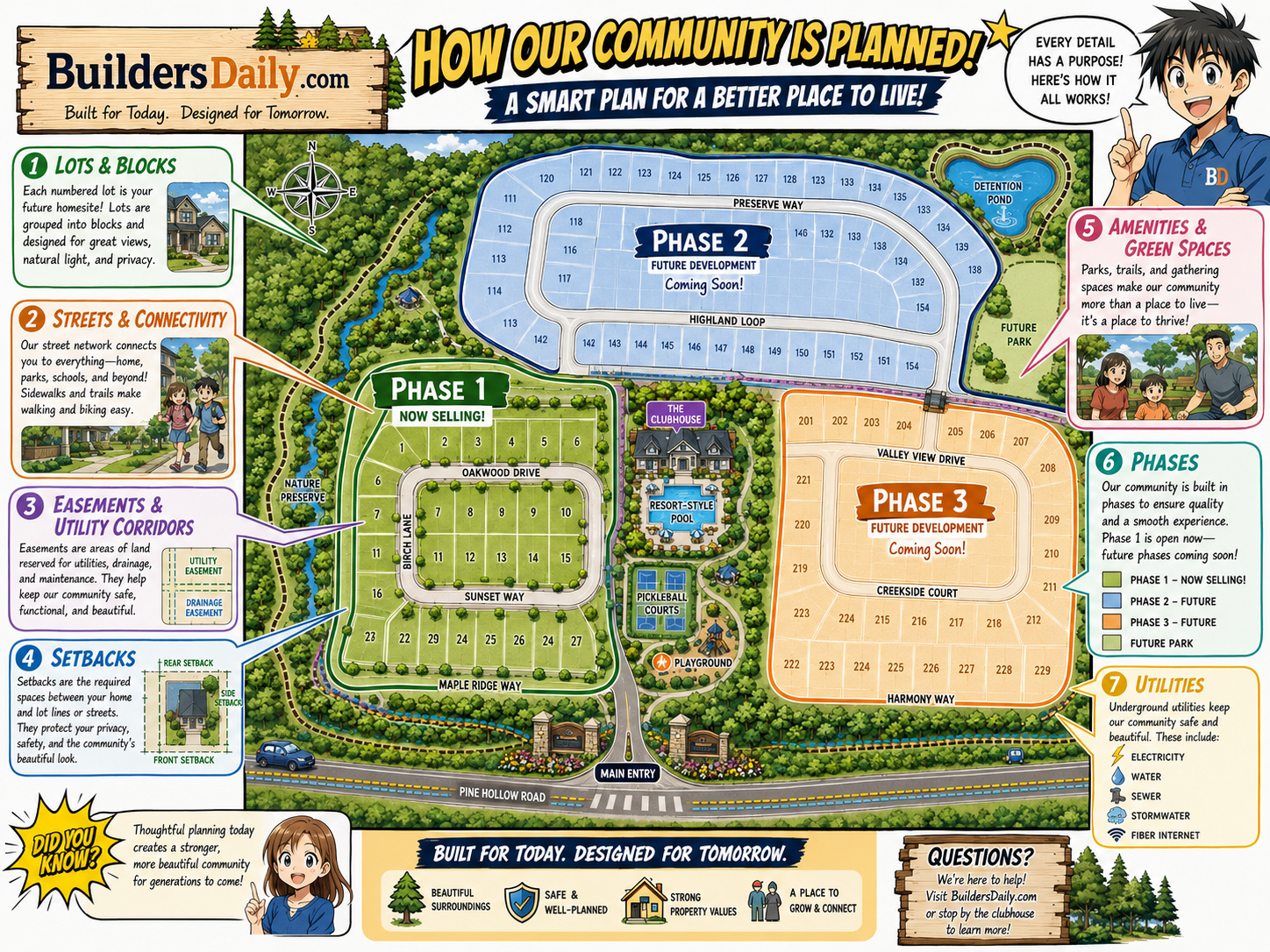
A site plan is a buyer expectation document.

The site plan is not just for builders and engineers. It shapes buyer expectations about lots, phases, streets, amenities, future construction, boundaries, HOA areas, and what daily life in the community may feel like.

Goblin warning

Three monsters hide inside the map.

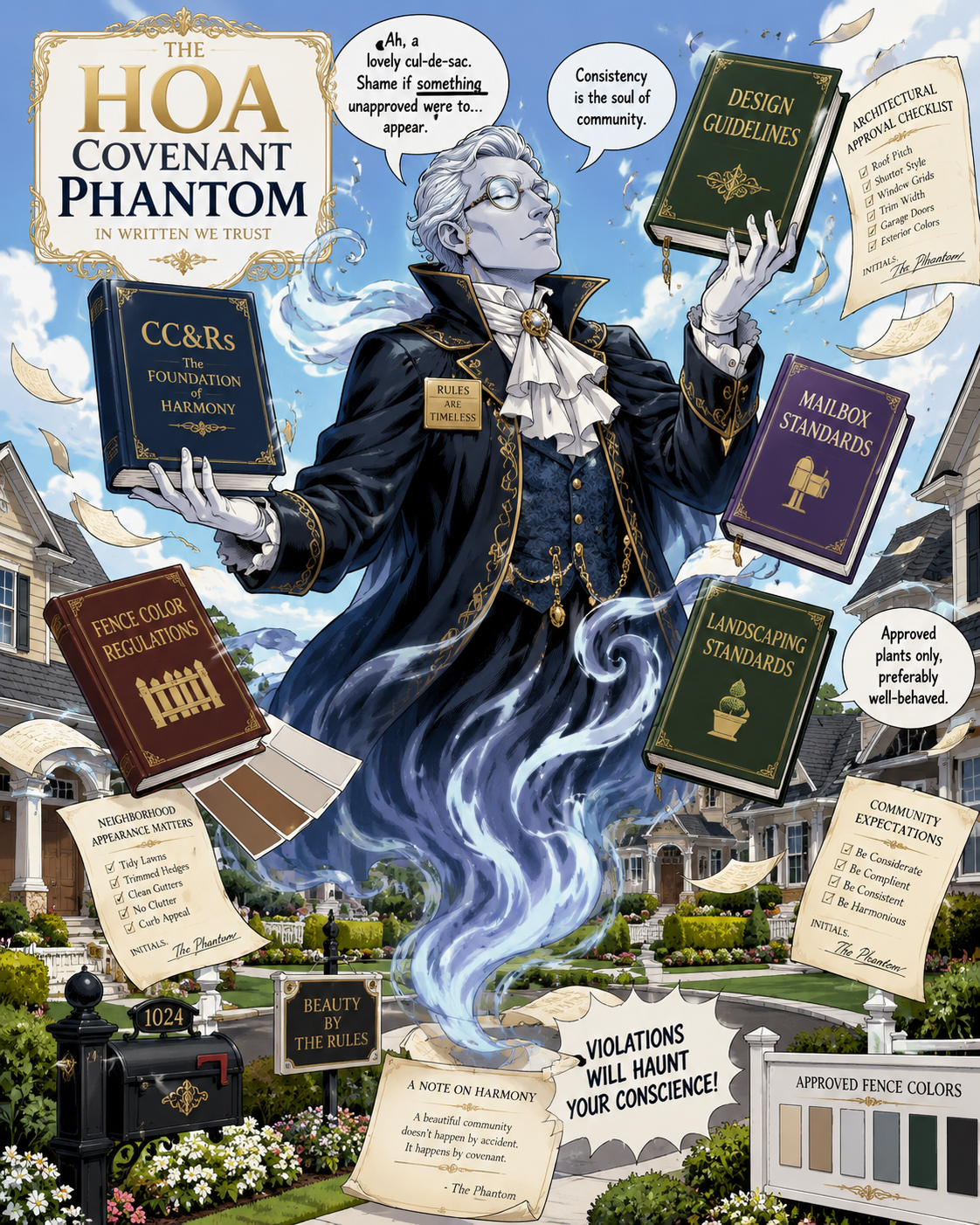
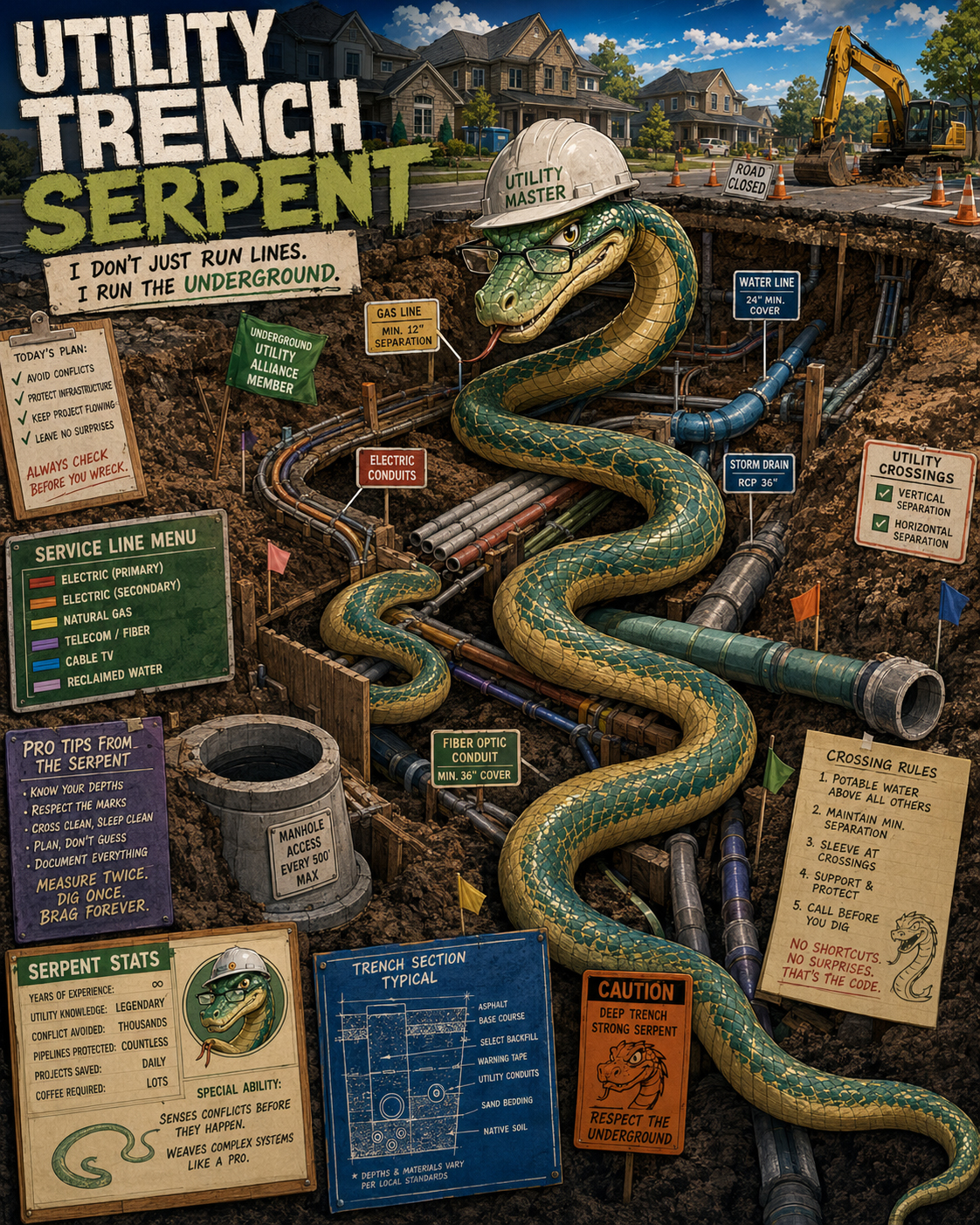
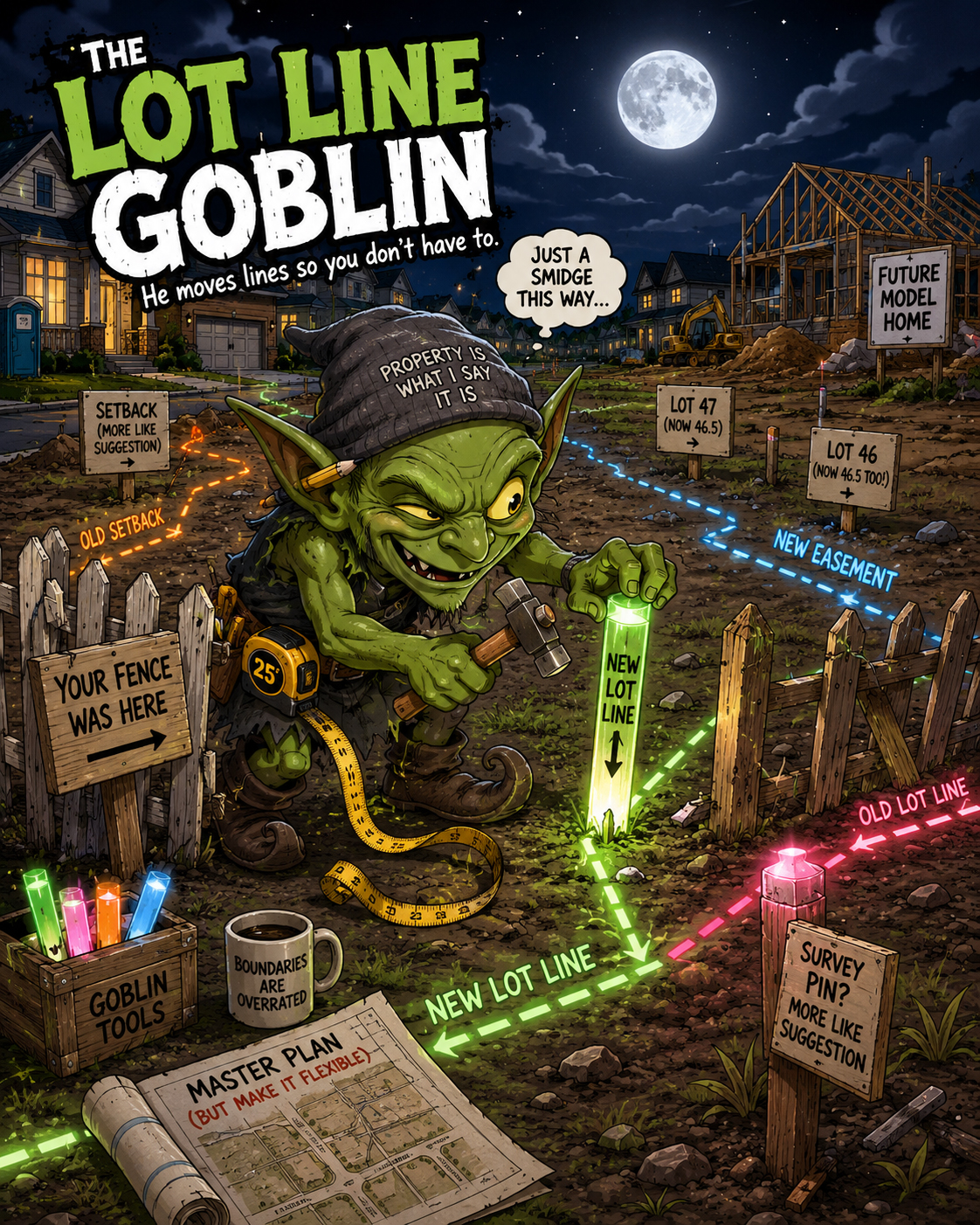
The site plan is where buyers can meet the Lot Line Goblin, the HOA Covenant Phantom, and the Utility Trench Serpent before they become surprises.

Lot Line Goblin

Appears when buyers assume fences, grass, stakes, setbacks, and property boundaries all mean the same thing.

HOA Covenant Phantom

Appears when buyers do not know which areas are governed by CC&Rs, design rules, maintenance standards, or HOA obligations.

Utility Trench Serpent

Appears when utility easements, transformers, service points, drainage paths, and future utility work are ignored.

Important

Educational guide, not survey, legal, engineering, or real-estate advice.

BuildersDaily.com is educational manga comedy about community-builder concepts. This guide is not survey, legal, engineering, planning, HOA, real-estate, financial, or project-specific advice. Always consult qualified professionals, current surveys, approved plans, governing documents, contracts, disclosures, and authorities having jurisdiction.

Hard hat, site plan, ruler, and educational site disclaimer visual