Production sequence • Land to warranty • Community phases

The community builder journey explained.

Production building is not one house repeated. It is a moving sequence: land, entitlement, grading, utilities, streets, pads, foundations, framing, rough trades, models, sales, closings, warranty, and future phases all trying to stay in rhythm.
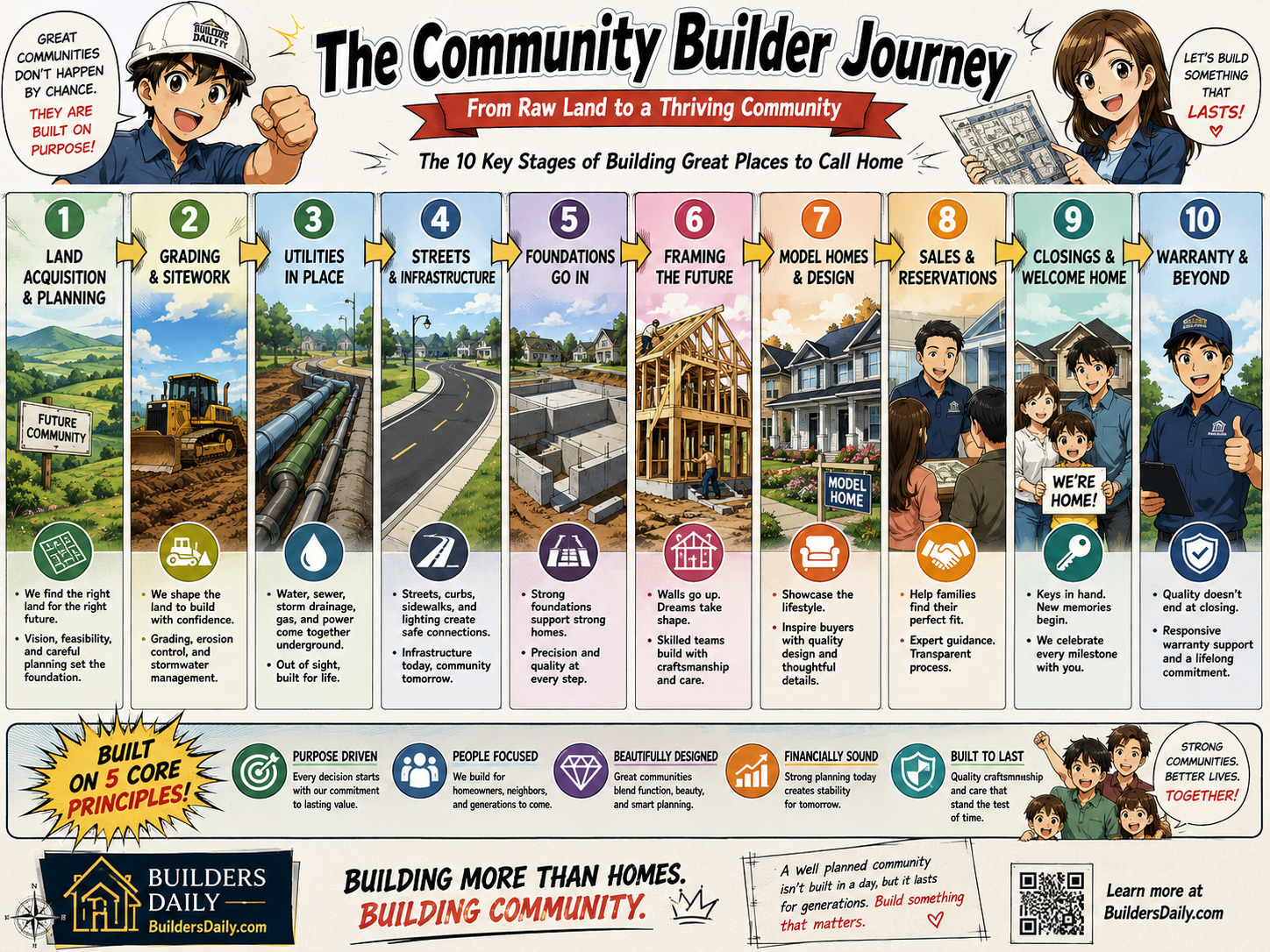
Timeline showing land, grading, utilities, streets, foundations, framing, models, sales, closings, and warranty
From dirt to closing to warranty Sequence first
Sequence overview

Every phase has a chain reaction.

Truth 01

The visible houses are the middle of the story.

Before framing, there are approvals, grading, utilities, streets, pads, and inspections. After framing, there are finishes, buyer walks, finals, closings, and warranty.

Truth 02

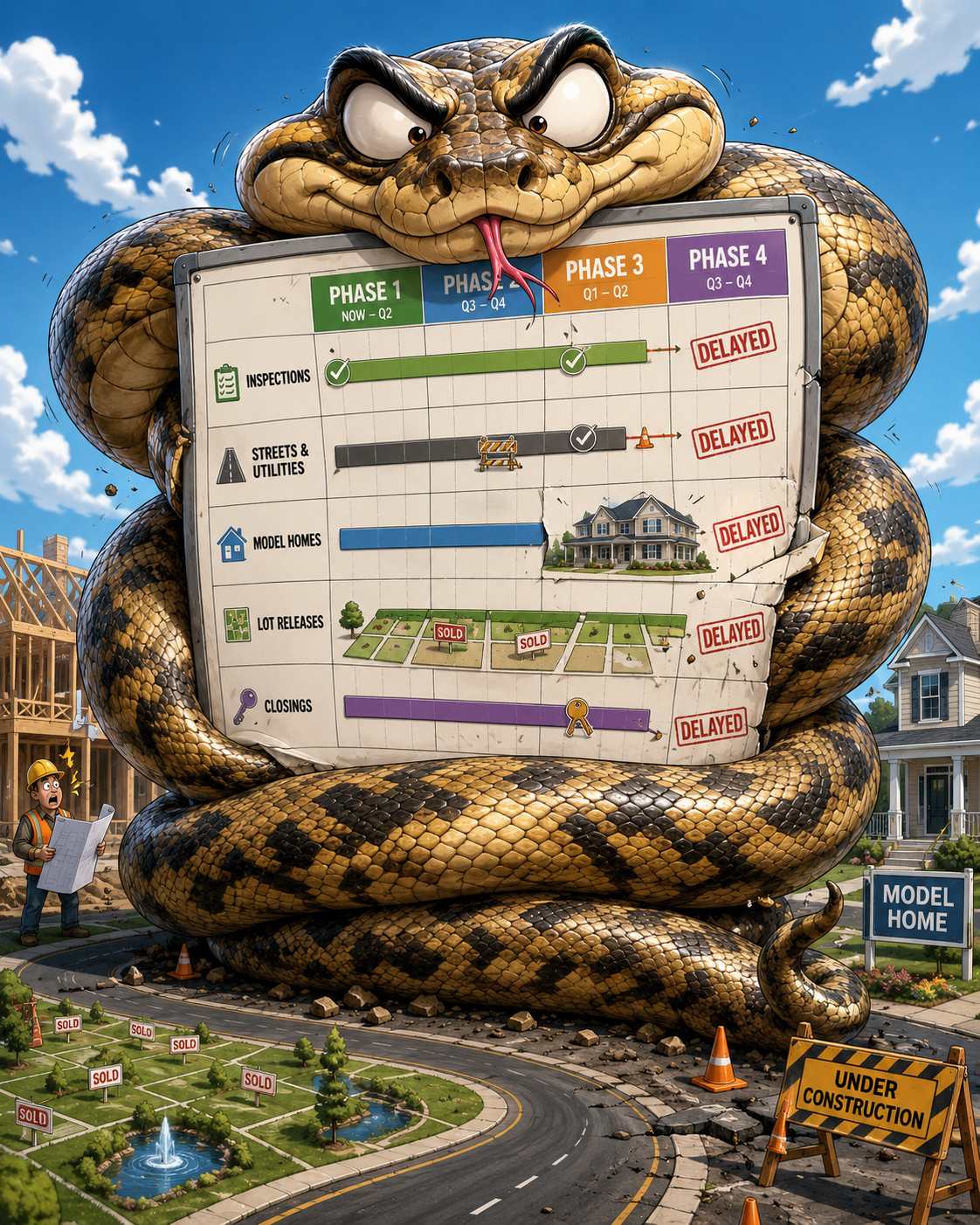
One missed predecessor can move many homes.

Utility release, inspection readiness, trade capacity, material timing, and sales pace can each move an entire production row.

Truth 03

The schedule must respect the market.

Starts should talk to sales pace, inventory, closings, incentives, and buyer confidence, not just construction ambition.

Production timeline

From land to warranty.

This is a simplified educational sequence. Actual projects vary by jurisdiction, product type, utilities, contracts, and site conditions.

1

Land, concept, and entitlement path

The builder studies the land, product concept, lot yield, access, utilities, approvals, market assumptions, and feasibility.

Monster: Entitlement Goblin
2

Planning, approvals, and conditions

Submittals, comments, hearings, conditions of approval, agency requirements, and revised plans shape what can actually be built.

Watch: comments, conditions, hearing dates
3

Grading and stormwater controls

Earthwork, pads, slopes, drainage, erosion control, detention, access, and site maintenance prepare the land for infrastructure.

Monsters: Grading Goblin, Stormwater Ogre
4

Utilities and streets

Water, sewer, storm, dry utilities, crossings, lighting, roads, sidewalks, curbs, and paving form the hidden backbone.

Monster: Utility Trench Serpent
5

Lot release and home starts

Released lots, ready pads, approved plans, trade capacity, materials, and inspections determine which homes can actually start.

Monster: Schedule Serpent
6

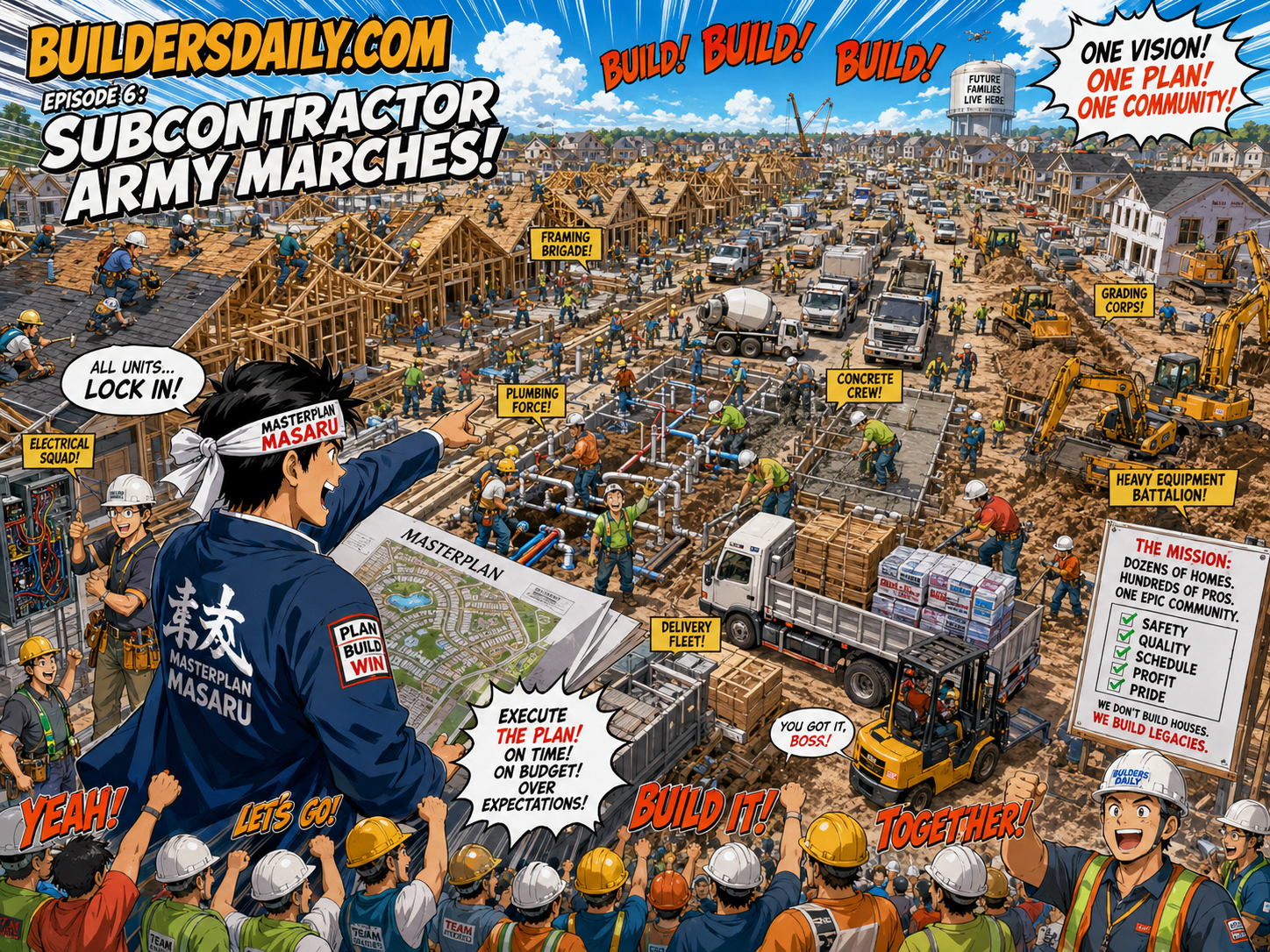
Foundations, framing, and rough trades

Foundations, framing, roofing, electrical, plumbing, mechanical, inspections, corrections, and trade flow carry the homes forward.

Monster: Subcontractor Army
7

Model homes, sales, and buyer selections

Models open, buyers choose lots and options, design deadlines arrive, and sales pace begins interacting with starts.

Monster: Model Home Mirage
8

Finishes, inspections, walkthroughs, and closings

Finishes, final inspections, punch items, buyer walkthroughs, lender/title work, documents, and closings converge.

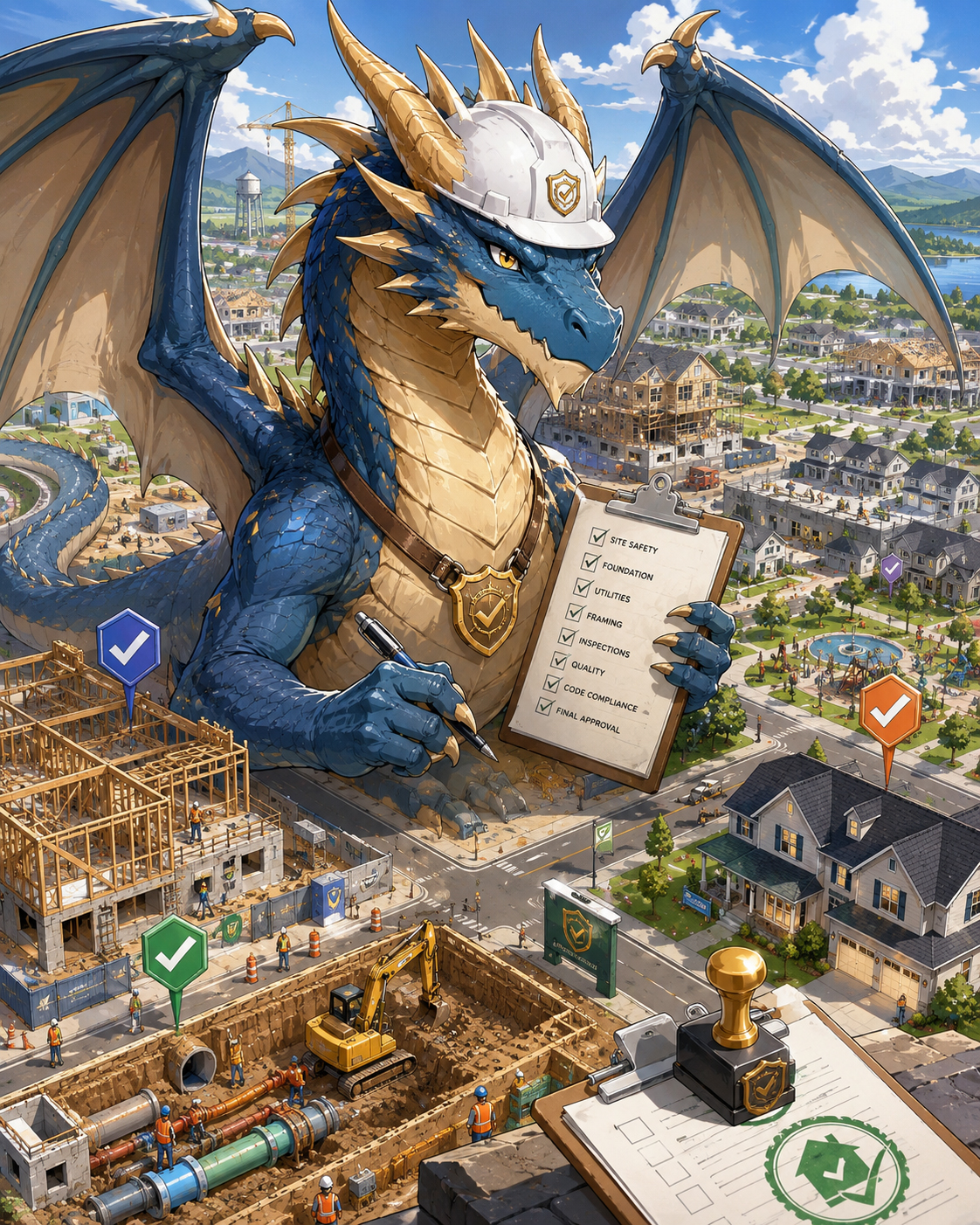
Monsters: Inspection Dragon, Absorption Oracle
9

Warranty, HOA, and future phases

After closing, warranty, HOA, maintenance, common areas, future construction, and community operations continue the story.

Phantoms: HOA Covenant, Lot Line Goblin
Phase logic

Why production builders phase communities.

Phasing helps manage capital, trades, infrastructure, buyer experience, and risk.

Reason

Infrastructure

Utilities, streets, drainage, and access usually need to be built in logical chunks.

Reason

Cash flow

Starts, sales, closings, and construction spending must stay aligned with the business plan.

Reason

Trade capacity

Subcontractors can build quickly, but not infinitely. Overstarting creates congestion.

Reason

Sales pace

Absorption determines whether the market is keeping up with the production machine.

Reason

Buyer experience

Access, dust, noise, amenities, model homes, and future construction affect the people moving in.

A production schedule is a system, not a wish list.

The best production builders track the chain: approvals, utilities, lot release, starts, trades, inspections, buyer selections, sales pace, closings, and warranty. Masaru does not just ask “what date?” He asks “what controls that date?”

Monster warnings

Each stage has a monster.

BuildersDaily turns production risks into characters so the sequence is easier to remember.

Early stage monsters

Entitlement Goblin, Grading Goblin, Stormwater Ogre, and Utility Trench Serpent attack before most buyers see homes.

Middle stage monsters

Schedule Serpent, Inspection Dragon, Subcontractor Army, and Budget Gremlin attack once production accelerates.

Late stage monsters

Model Home Mirage, Absorption Rate Oracle, Lot Line Goblin, and HOA Covenant Phantom attack buyer expectations and closings.

Important

Educational guide, not project scheduling or construction advice.

BuildersDaily.com is educational manga comedy about community-builder concepts. This sequence is general and simplified. It is not legal, engineering, scheduling, estimating, safety, financial, or project-specific construction advice. Always consult qualified professionals, approved plans, contracts, permits, schedules, and authorities having jurisdiction.

Hard hat, site plan, ruler, and educational site disclaimer visual