Subcontractor Army Marches.
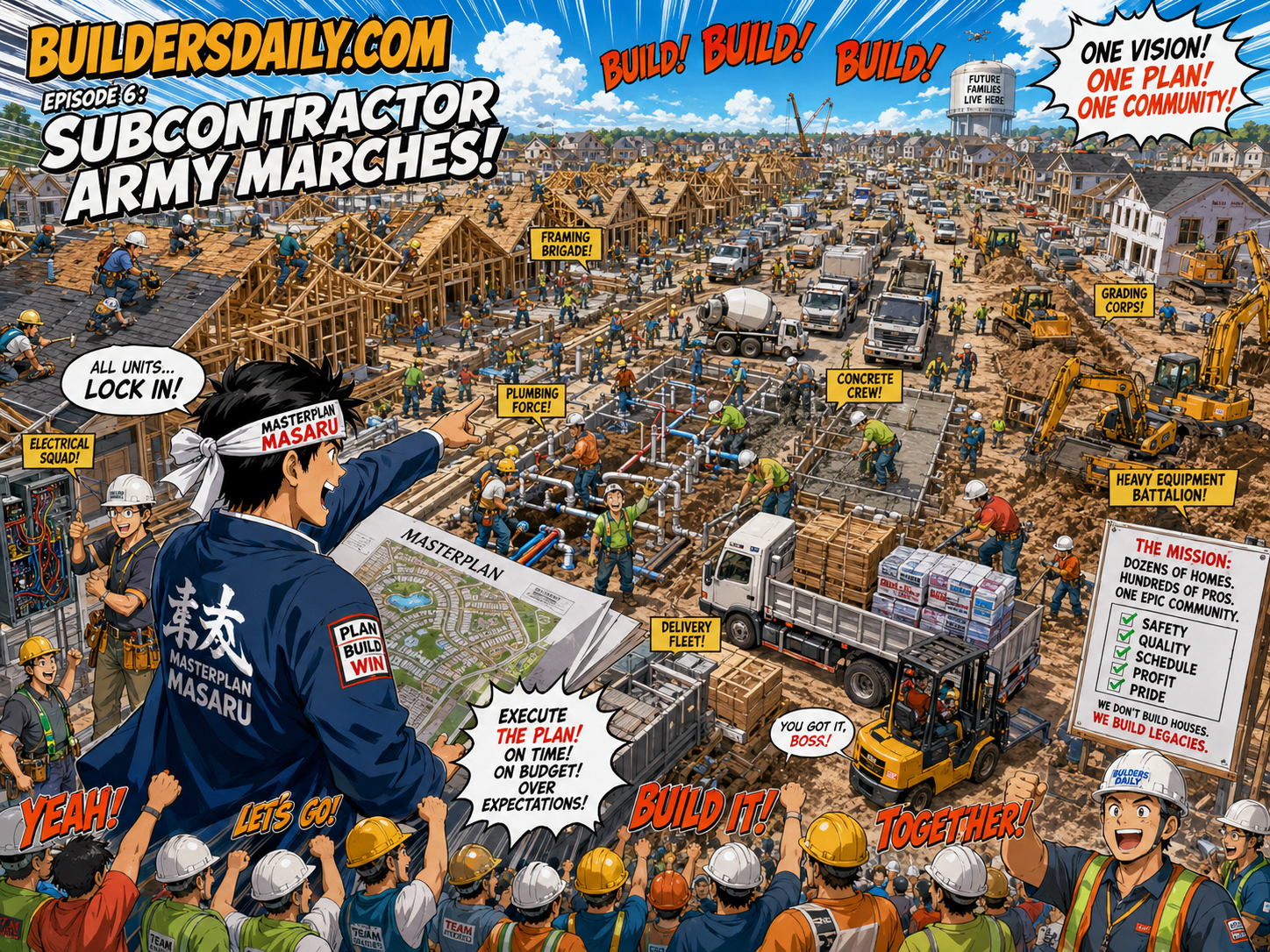
The model homes are selling. Now Masaru must keep the production machine moving as framers, roofers, electricians, plumbers, graders, concrete crews, inspectors, and delivery trucks march across the community at once.
The model homes are selling. Now Masaru must keep the production machine moving as framers, roofers, electricians, plumbers, graders, concrete crews, inspectors, and delivery trucks march across the community at once.
A start requires released lots, ready pads, utilities, plans, materials, trades, inspections, and access.
Too many starts can overload framers, roofers, rough trades, inspectors, suppliers, supervisors, and warranty teams.
Lumber drops, trusses, concrete, appliances, cabinets, roof loads, dumpsters, and street access all compete for space.
Episode 6 teaches that production building is a sequence, not a stampede.
Masaru looks at the starts schedule. Phase 1 is moving. The models are selling. The spreadsheet asks for more starts.
Framers, roofers, electricians, plumbers, HVAC crews, concrete crews, painters, landscapers, and inspectors line up like a production battalion.
Lumber drops block a driveway. A concrete truck meets a cabinet delivery. A roofer asks where the crane is supposed to go.
One home needs foundation inspection. Another needs rough inspection. A third needs final. The calendar starts hissing.
Masaru sorts the army by lot release, trade flow, inspection windows, delivery zones, street access, and safety constraints.
When starts match capacity, the army stops trampling itself. The phase becomes choreography instead of chaos.
Each trade has its own rhythm. The builder’s job is to keep the rhythms from colliding.
Pad readiness, access, compaction, drainage, and release timing control the starting line.
Framers, trusses, roof loads, dry-in timing, and inspection flow drive the visible pace.
Electrical, plumbing, HVAC, low-voltage, inspections, and corrections must move in clean order.
Cabinets, flooring, counters, paint, fixtures, appliances, and touchups depend on clean predecessors.
Driveways, sidewalks, landscaping, fencing, street access, and final curb appeal affect buyer perception.
Buyer walkthroughs, punch items, final inspection, documents, and closing dates must align.
The subcontractor army can build fast only when the route is clear: released lots, ready predecessors, realistic trade capacity, inspection windows, delivery zones, safety rules, and daily field leadership.
Production builders need speed, but speed without site control turns streets, deliveries, trades, and inspections into a hazard.
Plan lumber drops, roof loads, concrete trucks, dumpsters, parking, staging, and emergency access.
Calling inspections before work is complete wastes inspector time and creates false schedule confidence.
Overstarting can slow the whole community by spreading trades too thin.
The subcontractor army is marching. Now the Absorption Rate Oracle predicts whether the market can buy homes as fast as Masaru builds them.

BuildersDaily.com is educational manga comedy about community-builder concepts. It is not safety training, OSHA guidance, trade sequencing advice, legal, engineering, financial, or project-specific construction advice. Always consult qualified professionals, safety programs, approved plans, inspectors, and authorities having jurisdiction.