Inspection guide • Quality gates • Corrections • Approvals

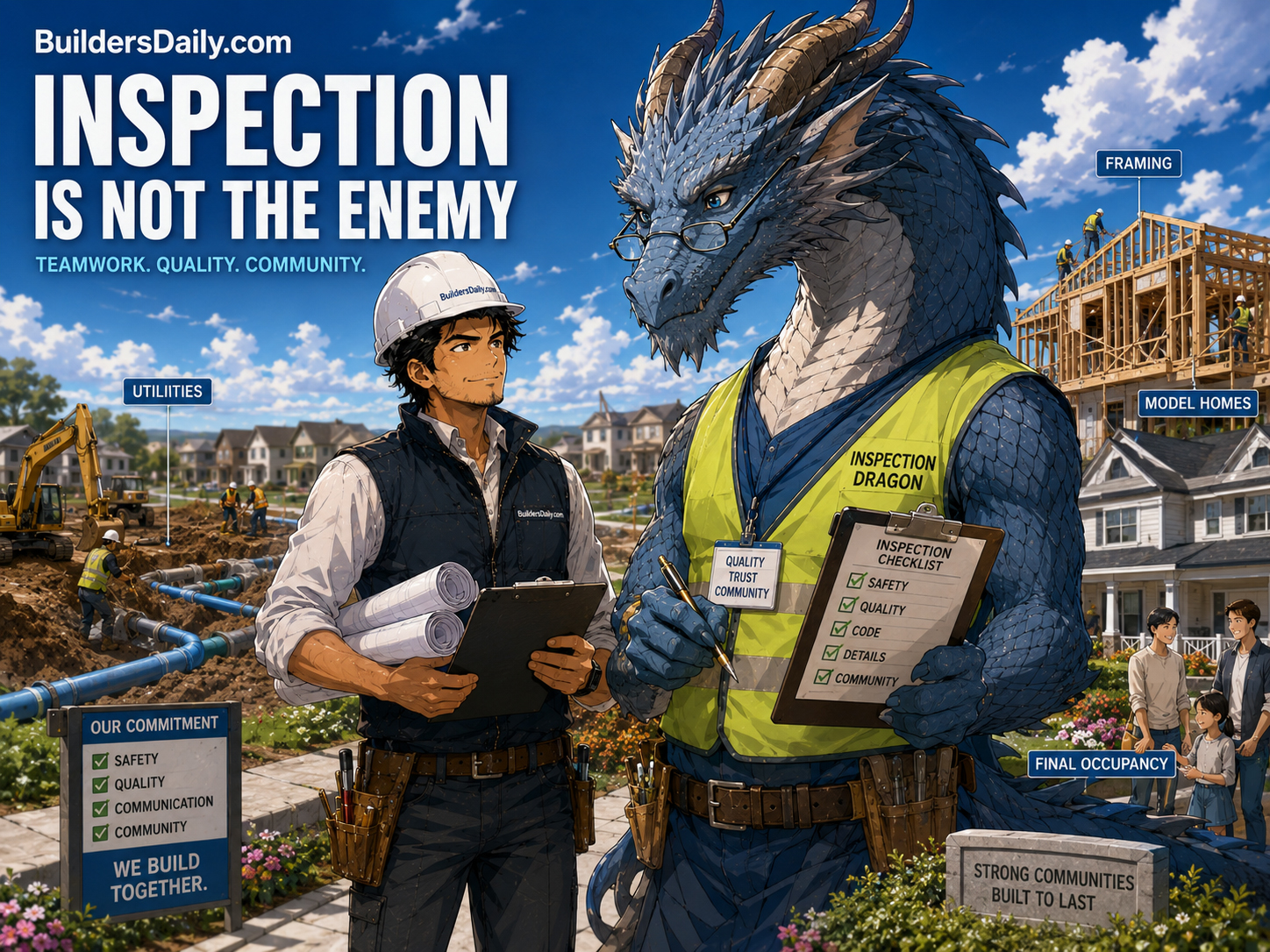
Inspection is not the enemy.

In community building, inspections are not random interruptions. They are quality gates for utilities, streets, foundations, framing, rough trades, models, finals, occupancy, and buyer-ready homes. Masaru respects the Inspection Dragon because the Dragon guards the community’s future.

Masaru respectfully working with the Inspection Dragon across multiple homes and site improvements
Approval gates protect the phase Ready is not approved
Inspection truth

The Dragon is a gate, not a villain.

Truth 01

Inspection timing is part of the schedule.

Inspection windows, correction items, testing, and approvals should be planned like real production tasks, not treated as last-minute obstacles.

Truth 02

Corrections are information.

A correction item shows where the field, plan, requirement, or communication did not align. Treat it as feedback before it repeats across more lots.

Truth 03

Ready and approved are different.

A crew can be finished and the superintendent can be confident. The next gate still requires approval, documentation, and clearance to move forward.

Inspection gates

Where inspections protect the community.

Every phase has gates. Know what each gate unlocks before calling it “done.”

Gate

Utility trenches

Testing, separation, bedding, compaction, pressure, depth, and agency signoff before backfill.

Gate

Streets

Subgrade, base, curbs, sidewalks, drainage structures, paving, access, and public works approval.

Gate

Foundations

Forms, setbacks, steel, embedments, soil conditions, and inspection before concrete.

Gate

Framing

Structure, shear, hardware, fire blocking, openings, details, and approved plan conformance.

Gate

Rough trades

Electrical, plumbing, mechanical, low-voltage, fire items, corrections, and close-in readiness.

Gate

Finals

Corrections, life-safety, occupancy, utility release, buyer readiness, and closeout approval.
Readiness checklist

Before calling inspection, ask these.

Calling too early wastes time. Calling correctly keeps the production machine moving.

Plans

Are the current approved plans on site?

Confirm field work matches the latest approved plan, revision, detail, and applicable condition.

Visibility

Can the inspector see what matters?

Do not cover, backfill, drywall, pave, pour, or conceal work before required inspection points.

Completion

Is the work truly ready?

Check trade completion, cleanup, access, corrections, testing, labels, documents, and safe inspection conditions.

Documents

Are required records available?

Have inspection cards, test results, product approvals, reports, signoffs, and required documents ready.

Corrections

Are prior corrections closed?

Track correction items by lot, trade, owner, due date, and verification before asking for the next gate.

Sequence

What does this approval unlock?

Know whether the inspection releases backfill, pour, close-in, drywall, final, occupancy, sales, or closing.

Inspection is part of production, not a break from production.

In a community, the same issue can repeat across many homes if nobody catches it early. Inspections, corrections, and approvals help the builder protect quality, schedule, buyer experience, and the long-term reputation of the community.

Correction tracking

Corrections should become a learning system.

The Inspection Dragon gets easier to work with when correction items are tracked, assigned, verified, and prevented from repeating.

Who owns the correction?

Assign each item to a trade, supervisor, or responsible party with a due date.

Does it repeat across lots?

If the same correction appears on multiple homes, fix the process, detail, trade instruction, or inspection readiness check.

Was completion verified?

Do not mark a correction complete just because someone said it was handled. Verify it before the next gate.

Important

Educational guide, not inspection, code, safety, or project advice.

BuildersDaily.com is educational manga comedy about community-builder concepts. This page is not code, inspection, legal, engineering, safety, entitlement, financial, or project-specific construction advice. Always consult qualified professionals, approved plans, permits, inspectors, safety programs, contracts, and authorities having jurisdiction.

Hard hat, site plan, ruler, and educational site disclaimer visual